

Cat
Gunn
Bio
Cat Gunn
My practice investigates how incomplete access to history affects individual identity and familial bonds in the present. I work in ceramics, sculpture, and installation to create spaces and arrangements reminiscent of deconstructed altars, domestic spaces, and fragmented structures. My compositions of modular pieces— ranging from alchemical material investigations to piles of ceramic fruit to found objects— offer non-linear narratives and interrogate how objects and materiality mediate relationships and memories. Utilizing the framework of racial melancholia, my work evaluates the relationship and imperial impacts of the US occupation of the Philippines from 1898-1946. This melancholia is an unresolved grief or inherent sense of loss resulting from processes of immigration, assimilation, and racialization. I examine the mechanisms of collective forgetting that often erase colonial conquest and imperial violence, instead asking who controls these narratives, why crucial information remains withheld, and how diasporic communities can challenge these stories.
My recent projects use slip cast moldmaking, image transfer, and installation to consider what is lost and gained in acts of transformation, translation, and abstraction. Some artworks play with simulacrum— such as piles of ceramic fruit that serve as offerings on an altar-like construction, but remain eternally ripe and never rotting, inviting contemplation on impermanence and the boundaries of passing, queerness, and perceptions of reality. Other objects offer narratives— such as ceramic pig heads that explore how colonial occupation altered food histories of Filipino dishes, like sisig. Using creative-fictional poetics to offer fragments of personal stories within collective diasporic histories, my own family history becomes the lens through which I explore broader questions of invisibility, silence, and who decides settled history.

Jungle Foliage Fragment 2
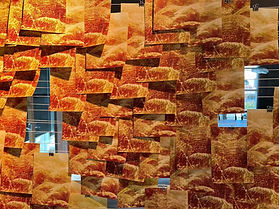
Jungle Foliage Fragment 2
This installation reimagines a landscape from my maternal family’s life— the Filipino jungle— as a repeated fragment of a fern fronds. The repetition of these plants printed multiple times displays not a true replica of the environment, but a trace of the original. The use of only two images speaks to my own constraints and desires to still forge connections where there are only fragments and limited knowledge. The images themselves are recovered from a digital archive, resized, cropped, and altered to be printed on a risograph. The residue of risograph prints leave stains, smudges, and traces of ink on the hands of those who handle the works. This residue parallels the traces of diasporic memory, considering the subtleties of preservation and loss. The accumulation of the repeated image traces diasporic lingerings of inherited memory, longing, and the seemingly impossibly nostalgia for a homeland one has never known. Moldmaking and creating editions of ceramics have led me to this exploration of printed editions and their potential to facilitate environments through installation strategies.
Although the image exists as a still, the movements caused by the wind or viewers passing by allows for a simulation of a gust moving through the jungle, reminding us of the passage of time and everchanging landscapes; although we may view the work again, due to the shifting sunlight and movements of natural forces, it will never be the same as the last time you viewed it.